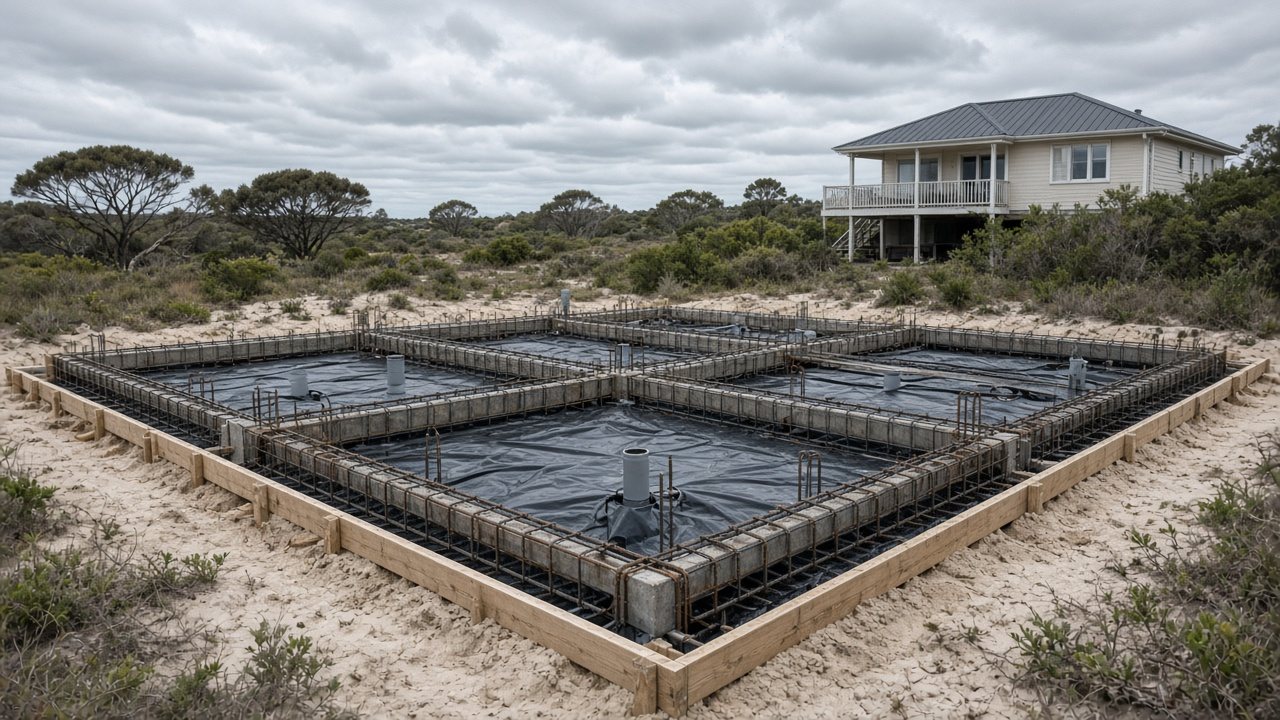
Concrete slabs on coastal sand: a Rosebud owner's guide
Building on the peninsula means building on sand. This guide explains what that means for house, garage and shed slabs around Rosebud, and what to ask your builder or concreter before the pour.
Email: info@rosebudconcreters.com.au
Sand is not one material
Clean, uniform dune sand compacts well and drains quickly, which makes it a good foundation. The trouble comes from what is mixed in or sitting on top: dark organic topsoil, buried timber and rubble from old beach houses, loose fill tipped to level a block, and pockets that were never compacted. A soil test, plus a careful look during excavation, tells you which kind of sand you have.
Site classification and why it matters
Under AS 2870, a geotechnical engineer classifies the site based on soil type, reactivity and other factors such as fill, trees and abnormal moisture. Many peninsula sites come back as sand or slightly reactive, but uncontrolled fill or wet ground can push a site into a 'problem' category that needs a specially engineered slab. The classification drives beam depths, steel and slab type, so it should never be guessed.
Water tables near the wetlands
Low areas of Tootgarook, Capel Sound, Rosebud West and Boneo can have groundwater close to the surface in winter. That affects excavation, can soften trench walls and may require sub-surface drainage or a raised slab level. Ask your engineer whether the soil report noted groundwater, and plan the build season accordingly.
Keeping sand under the slab
Water flowing along the edge of a slab can wash sand out from beneath it over time. Good site drainage, downpipes connected to stormwater, paths and garden beds that fall away from the house, and edge beams of the correct depth all keep the foundation intact.
Salt, cover and curing
Within reach of the bay, salt-laden air makes concrete cover over reinforcement important. Bar chairs that hold steel at the right height, a mix specified by the engineer, and proper curing reduce the chance of corrosion years later. Ask how the slab will be cured, particularly in summer.
Questions to ask before the pour
What is the site classification? Was groundwater found? Where will the pump set up? Who inspects the steel and when? How will the slab be cured, and how is wind and blowing sand managed on the day? A concreter who answers these clearly is one who has planned your job.
Book a Rosebud site walk
We come out from McCrae to Sorrento at no charge. Rates are left off this site because peninsula sand, old slabs to break out and pump access change from block to block.